WP2 – Synthesis of ceramic samples of the “yellow” pavers type
Start and end of the work package: from Month 07 to Month 27
The main work at this stage will be related to the laboratory synthesis of ceramic products of the “yellow” pavers type. At the beginning, as a result of the work on WP1, the possibilities of combining different marls and MgO-rich additives will be explored. High-temperature microscopy and optical dilatometry tests will be conducted to determine several starting compositions featuring an extended sintering interval and reduced operating temperature, which ensures the absence or minimal reduction of Fe3+. For these initial syntheses it is predicted to work only with compositions without significant deviations from the chemical composition of the historical “yellow” pavers.
After that, detailed studies with the selected compositions are planned, which includes determination of optimal temperatures and times of the heat treatment of each of them, DTA analyses, precise determination of phase composition and structure of the samples with XRD and SEM-EDS analyses, determination of water absorption and total porosity.
After that, work will also begin on measuring the plasticity and the possibilities of its decreasing after the calcination of part of the marls with or without the addition of the magnesium raw material.
Plasticity is the characteristic behavior of a ceramic material to deform permanently after the application of an external force. It is defined as the ability of the sample to deform without breaking. Various methods are available to measure it and they are classified into two groups: direct and indirect methods. In this project, it is expected that Moore’s direct method, which is used in the “Silicates” department at HTMU-Sofia, will be used. Cylindrical test specimens with different humidity are prepared and their deformation is determined after a single impact with constant pressure. The degree of deformation, which is an indicator of plasticity, is the ratio between the initial height of the specimen and that after the impact.
To obtain additional information, the team is expected to study the alternative indirect methods of Atterberg and Pfefferkorn in parallel.
The change of initial porosity with variation of forming pressure will also be investigated. Particular attention, mainly in the case of possible work with asbestos waste that destroys during calcination, will be paid to the change of phase composition. This is also necessary to ensure that no free CaO is formed during this pre-heat treatment.
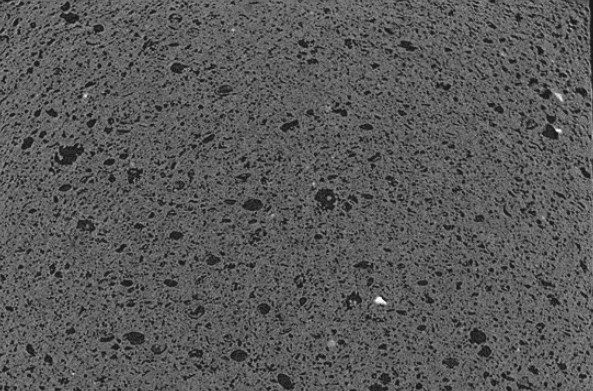
With thus obtained optimal batch will be performed identical studies as ones of the corresponding base compositions without calcination treatment. Key to the project will be the comparisons of shrinkage during firing and the associated reduction in heat treatment time. Computed tomography will also examine the possible change in the structure of the two types of samples.
A workshop will be organized to discuss the obtained results. The materials will be presented on the project site. As a result, articles that will be directed to specialized international journals will be prepared. These materials will be reported at international conferences.
The head of WP2 is Prof. Karamanov.